- Sting calls John Cena ‘one of the greatest of all time’
- “My Time Is Coming” – WWE Star Comforts Young Fan With Determined Message After Upsetting Loss
- Jonathan Kuminga gets DNP as shorthanded Warriors win again
- what is the Gautam Gambhir vs Parth Jindal controversy?
- WWE CEO Nick Khan Assesses What Logan Paul Brings To The Company
- Mike Sullivan Is ‘Disappointed For The Players†After Rangers’ Overtime Loss To Golden Knights
- Former Dodgers, Giants slugger and noted curmudgeon Jeff Kent voted into the Hall of Fame
- Tony Khan says he isn’t ready to discuss Netflix-WBD acquisition
Browsing: Jonathan
CHICAGO — The Golden State Warriors’ fourth-highest-paid player, Jonathan Kuminga, was not among the 11 players to enter Sunday night’s 123-91 blowout win over the Chicago Bulls, despite the absence of Stephen Curry, Draymond Green and Al Horford.
“Happens to everybody pretty much, other than the stars,” Warriors coach Steve Kerr said about not playing Kuminga. “Guys come in and out of the rotation, depending on who’s available, how the team is playing.”
Kuminga’s fifth season — much like his previous four with the Warriors — has generated consistent attention despite him receiving inconsistent playing time from an organization that has never seemed to be the perfect fit.
After a contentious restricted free agency dragged a few days into training camp, Kuminga returned on a two-year, $46.8 million contract with a team option for the second season — a team-friendly, tradeable structure he felt forced into accepting, league sources said at the time. The negotiations generated bitter feelings on both sides.
Editor’s Picks
1 Related
But there was a glimpse of growth and optimism to open the season. Kuminga started at power forward and was a major factor in the team’s 4-1 start, prompting Kerr to name him as the entrenched starter.
But the momentum stalled and the messaging flipped, as it often has in Kuminga’s tenure. The team hit a mini-skid, and he was pulled from the starting lineup after 13 games. He sat the next seven because of knee tendinitis and has been ineffective since his return, making only 12 of 40 shots in four games.
That was punctuated with a 1-of-10 night in Cleveland on Saturday, when Kerr pulled him for reserve forward Gui Santos in the fourth quarter despite the Warriors missing Green, Curry and Jimmy Butler III. As the Warriors closed out the Cavaliers for an upset win, Green was calming down a frustrated Kuminga on the sideline.
Butler returned for Sunday’s game against the Bulls, eating up a chunk of Kuminga’s minutes. In the lead-up, Kerr used Santos as the primary backup and went away from Kuminga, placing him outside of the scripted 11-man rotation.
“This is how the league works,” Kerr said. “There’s always someone knocking down the door, trying to get your job. So, it’s on everybody to just compete, bring their best effort for the team. We’ve got a lot of guys doing that.”
Kuminga said Kerr’s message to him before the game was simple — the Warriors were going in a different direction.
“I’m not really sure [how long it lasts],” Kuminga said. “But as long as things are working out there and we winning, I don’t see the point of switching anything, changing. Whenever my number get called, I’ll be ready.”
The Warriors won a second straight road game Sunday night behind some inspired performances.
Two-way point guard Pat Spencer scored in double figures for a fourth straight game. Second-year center Quinten Post made five 3s. Brandin Podziemski scored 21 points, the most he has had since late October. The Warriors held the Bulls to 91 points one night after limiting the Cavaliers to 94 points.
“We’ve been doing good,” Kuminga said. “Things are working. So, I don’t see the point of taking certain people out of the rotation when we doing good, and things are going well.”
The Warriors end this road trip with a 13-12 record. They get four days off before a home game against the Timberwolves on Friday, when Curry and Green are expected back, further burying Kuminga in the rotation.
“I don’t have any problems,” Kuminga said. “I’m going to work out every day, stay ready, because you never know how these things works. I believe in my game and feel good about my game. I just got to be a professional. Things happen. It’s happened before.”
Kuminga becomes trade eligible Jan. 15. The Warriors are expected to explore the Kuminga trade market in the weeks ahead as the probability of a split before the February deadline remains strong, according to league sources.
“I keep everything that happened in the summer in the past,” Kuminga said. “I can’t focus on everything at the same time. It’s going to take me off track. Whatever happened in the summer, I can’t control that. I’ve moved on from that.”
In recent days, Kerr has asked Kuminga to run the floor hard instead of lingering back and asking for the basketball. The team has been urging him to make quick decisions and not settle for midrange jumpers.
“We have a good relationship,” Kuminga said when asked about Kerr. “We talk and figure out things. We don’t have any problem. I don’t have any problem. Just didn’t go my way. I’m going to stay happy, stay locked in, stay focused, stay positive.”
It was announced on Sunday that Gresham will face Lee Moriarty in his return match on February 1 as part of the upcoming Superpower Slam charity event presented by Orange Crush, JCW, and GCW.
*SUPERPOWER SLAM UPDATE*
The returning
JON GRESHAM
vs
LEE MORIARTY
Melrose Ballroom in NYC
Sunday, February 1, 2026
7 PMBenefiting the neurodiverse community
Plus:
Willow vs Mara
Paul Walter Hauser vs. Mad Dog
Billie Starkz
Matt… pic.twitter.com/qnLM4zCAph— Jersey Championship Wrestling (@JerseyCW) December 7, 2025
Gresham, 37, revealed back in August that he was unable to use the left side of his body and struggled to talk after waking up. He was taken to the hospital where it was revealed he had suffered two strokes. He last wrestled at Josh Barnettâ€s Bloodspot XIV on August 2, losing to Pete Dunne.
The charity event will raise funds for the Little Oaks Center for Neurodevelopment. The center provides resources, therapies, and services for neurodivergent children and their parents. Billie Starkz, Matt Cardona, Mance Warner, and Joey Janela have been announced, and matches set include Paul Walter Hauser vs. Mad Dog Connelly and Willow Nightingale vs. Mara Sade.
After Superpower Slam, Gresham is also booked for JCWâ€s 2026 Jersey J-Cup on February 6 & 7 in Jersey City, New Jersey.

Exclusive access to podcasts and newsletters
Bryan Rose
Bryan Rose is an editor from California that has been covering professional wrestling for well over a decade. He officially joined F4WOnline as an editor in 2017.
previous story
Steve Kerr shares what Warriors need from Jonathan Kuminga, Brandin Podziemski originally appeared on NBC Sports Bay Area
On the first night of a Midwest back-to-back, the Warriors will be down several key contributors — namely stars Steph Curry, Jimmy Butler and Draymond Green — against the Cleveland Cavaliers.
Without those steady veterans, coach Steve Kerr needs a big night from Golden Stateâ€s second timeline, particularly two players who have struggled lately: Jonathan Kuminga and Brandin Podziemski. Before Saturdayâ€s matchup in Cleveland, Kerr detailed some areas he needs to see improvement from that young duo.
Advertisement
“Well, JK, itâ€s always run the floor, take care of the ball — the turnovers have been an issue lately,†Kerr told reporters. “So Iâ€m really urging him to get up the floor instead of, you know, holding back in the backcourt and asking for the ball. I want him to be the first guy down the floor, not the last. And I think thatâ€s been an issue the last few games. I donâ€t think heâ€s running the floor that well.â€
Kuminga had a strong start to the 2025-26 NBA season but hasnâ€t looked quite like himself since returning from a seven-game absence due to bilateral knee tendinitis.
Podziemski, on the other hand, has been thrust into a larger role while Curry is out with a quad contusion. But in Thursdayâ€s loss to the Philadelphia 76ers, Podziemski was a team-worst minus-20 in just under 20 minutes, while third-string point guard Pat Spencer was a team-best plus-17 in 24 minutes.
Advertisement
“And then with Brandin, heâ€s got to get off the ball early,†Kerr continued. “When he gets into trouble is when he tries too hard to make plays on his own, instead of doing what he does best, which is to move the ball and be part of a five-man group that is really executing.
“Thatâ€s why Pat has closed these last couple of games and played most of the fourth quarters, if not all, because heâ€s doing that. So Brandin needs to get back to just focusing on the things he does best.â€
With Golden State missing practically all of their veterans on Saturday, Kerr needs Kuminga and Podziemski to return to form to have any chance at taking down a talented Cavaliers squad on the road.
Jonathan Gresham is returning to the ring.
In early August, Gresham revealed that he had woken up unable to use the left side of his body and was struggling to talk. He was taken to the hospital, where he was told he had suffered two strokes.
Game Changer Wrestling has announced that Gresham will return to the ring for its Jersey Championship Wrestling show on Sunday, February 1, at the Melrose Ballroom.
GCW wrote on Monday:
“JON GRESHAM makes his return to the ring on February 1st for GCW & @JerseyCW’s SuperPower Slam!”
The show is a charity event and will raise funds for the Little Oaks Center for Neurodevelopment. The center provides resources, services, and therapies for neurodivergent children and their parents.
Paul Walter Hauser, Matt Cardona, Mance Warner, Man Like Dereiss, and Effy are also booked for the show.
Gresham last wrestled at GCW Josh Barnettâ€s Bloodsport XIV on August 2 in Rutherford, New Jersey, where he lost to Pete Dunne.
Exclusive access to podcasts and newsletters
Ian Carey
Ian Carey is a writer from Toronto, Ontario, Canada, whose work has been featured in NOW Magazine, The Huffington Post, and more. A lifelong wrestling aficionado born in Calgary, Alberta, Canada, he has covered the industry for a decade and a half. He joined the f4wonline.com team in 2019.
previous story
Over the course of 150 years of Test cricket history there is a reason why successful batting has been built of solid defence, not sailing down the pitch and taking a swipe at the bowling.
I have spoken to a number of former Australia players since the first Test ended. One problem they identified is a lack of accountability in the England set-up.
“That’s the way we play,” is a mantra of this England team and it is one of their failings.
There should be some reflection on what happened in Perth, looking at what happened in a mature fashion.
The shots Brook was playing were from the third XI of a village team. He needs to grow up. Compare Brook with the wonderful innings of Travis Head. There is a huge difference between recklessness and controlled aggression.
We have laboured the point about England’s limited preparation, but a lot of what we feared came true in the first Test.
When it was announced that England had only one warm-up game against the Lions, we could have predicted how wickets would fall in the first Test: edging rising deliveries outside off stump by attempting to play booming drives. Look what happened.
A lot of the anger aimed at England comes from a feeling they do not care. Supporters see the way these England players get out and think it does not matter to them.
I can categorically say it is not true. The players care deeply. In the aftermath of the Test I saw Crawley in a cafe. He had just bagged a pair, facing only 11 balls in the match.
He looked utterly miserable, sitting there like a man with a contagious disease. He was certainly not out having a good time, or playing 18 holes on the golf course.
The golf narrative is another I can defend England from. When they train, they train hard. What are they supposed to do for the rest of the day? Sit in their hotel rooms watching Netflix? There is nothing wrong with being in the fresh air, doing something to take the mind away from cricket.
England are only 1-0 down. It would be madness to write them off in this series. One thing they can take from Perth is they exposed some vulnerabilities in the Australia team.
But Stokes, McCullum and the rest must pick themselves up and understand the right way to go about things in Brisbane.
I once played in a one-day international at the Melbourne Cricket Ground where we got trounced by seven wickets. We walked off in front of 85,000 people knowing we had been thoroughly outplayed. I never wanted to experience that feeling again.
This England team will have gone through the same in Perth and should now be determined not to have a repeat in Brisbane.
A result at the Gabba is vital. If England go 2-0 down, jobs and careers will be on the line.
Warriors’ Steve Kerr unsure about Jonathan Kuminga’s rehab from knee tendinitis originally appeared on NBC Sports Bay Area
Jonathan Kuminga already has missed the Warriors†last five games due to bilateral patellar tendinitis, and it doesnâ€t seem like a return to action is imminent.
Advertisement
Golden State coach Steve Kerr shared an uncertain update on Sunday, failing to provide much of a timeline for the young forwardâ€s recovery from what is effectively soreness in both knees.
“Heâ€s got to tell you where he is,†Kerr told reporters when asked about Kumingaâ€s activity on Sunday [h/t ClutchPoints†Kenzo Fukuda. “He didnâ€t do anything. We didnâ€t do scrimmages, but we did live drill work, and he barely did any of that. So, [heâ€s] not moving well, so training staff [is] working with him. I have no idea what heâ€s doing.â€
Still, Kerr asserted Kumingaâ€s status remains day to day.
“Honestly, I just talked to the training staff. They tell me itâ€s day to day,†Kerr explained. “So, talking to JK, and he said heâ€s not moving that well, so I canâ€t tell you what the outlook is.
Advertisement
“JK can tell you that better than I could, so he needs to feel better and be able to move better before we can put him out there. Maybe weâ€ll get imaging done on the knee, but yeah, we got to figure it out. We missed him. We played in Miami, when we were missing all our guys. The other night, we were tired. We need him, but heâ€s got to get right before he can play.â€
Communication between the Warriors†staff and Kuminga already has been a hot topic in recent days, and there appears to be some disconnect between Kerr and the promising 23-year-old regarding this ongoing injury.
“I didnâ€t talk to him today, but I was hoping that he was going to scrimmage today,†Kerr continued after a follow-up question about the exact nature of the ailment. “But he didnâ€t do that, so itâ€s obviously worse than we thought.â€
Kuminga is averaging 13.8 points, 6.6 rebounds and 2.8 assists in 27.7 minutes across 13 games during the 2025-26 NBA season. He started in the Warriors†first 12 regular-season games before coming off the bench in Golden Stateâ€s win over the San Antonio Spurs on Nov. 12.
Advertisement
However, Kuminga reportedly felt like the “scapegoat†as a result of that change in his role, and he hasnâ€t played in any games since then. Golden State has gone 2-3 in his recent absence with three straight losses as the team tries to get back to winning ways after a hot start to the season.
To open the season, Jonathan Kuminga seemed to have found a groove with the Warriors. Through the season’s first nine games, he averaged 17.2 points and 7.1 rebounds per game and shot 41.4% from 3-point range. Coach Steve Kerr said Kuminga was the team’s fourth full-time starter.
In the last five games, he has fallen off to 9.6 points and five rebounds a game, shooting 15.4% from beyond the arc, with almost as many turnovers (2.7) as assists (2.8). With that, Kerr moved Kuminga to the bench, but that has brought up old feelings from a long and rocky relationship with his coach, reports Anthony Slater at ESPN.
Advertisement
“He feels like the scapegoat again,” one team source said …
Kuminga, team sources said, had voiced to Kerr a desire to be coached harder. There was even a meeting about it in their Sacramento hotel prior to the ninth game of the season and Kerr appeared to make it a point during the Kings game to call Kuminga over and get on him constructively several times.
But 4-1 became 6-6. Kuminga’s knees began bothering him. His defensive juice and burst to the rim lessened. He went 1 of 9 shooting at home against the Pacers, missing all five of his 3s. Coaches dinged him for his perimeter shot selection as a reason for his minute reduction (season-low 20).
The cloud over all of this is that, as of Jan. 15, Kuminga becomes trade eligible, and the Warriors are expected to test the trade waters. Part of the point of the two-year, $46.8 million contract (with a team option the second year) was that it was very tradable. This is a case where it feels like a fresh start somewhere else would be good for Kuminga, but the Warriors are not going to get much value back in a trade if he is struggling in a bench role. Kuminga has been out of the last four games with knee tendonitis, and the Warriors went 2-2 during that part of the road trip.
Advertisement
At some point in the next month, Kerr is going to lean on Kuminga again — the Warriors could use his athleticism — but if he is going to prove to other teams he deserves the opportunity he feels he is not getting in Golden State, he has to be more consistent. And stay healthy.
He has to look like the guy from the first nine games of the season.
JIMMY BUTLER WAS at a padel event in Marbella, Spain, when Jonathan Kuminga reached out in mid-September.
Butler had organized a player-led gathering to be held at his house in San Diego the following week. The veterans wanted everyone there, particularly Kuminga, who Butler planned to work with individually, believing in the human and the basketball talent.
“I f—ing love him,” Butler told ESPN. “I know he has fans, but I’m his No. 1. Because he got all the tools to be great. Somebody just needs to show him how to utilize these tools.”
Kuminga had called Butler to break the news that negotiations with the Warriors remained stalled. A contentious restricted free agency was bleeding toward training camp. He wouldn’t be in San Diego. His relationship with the franchise was too shaky and uncertain.
“Bro, that’s fine,” Butler recalled telling Kuminga from Spain. “You got to do what’s best for you. I understand the situation you’re in. I don’t think anybody on the squad got bad blood. I rock with you. I see a lot of myself in you.”
Editor’s Picks
2 Related
The first four weeks of Kuminga’s fifth season with the Warriors have mirrored much of his career. He flashed the tantalizing upside, helped them burst out to a 4-1 start and gained enough traction for coach Steve Kerr to publicly install him as an entrenched starter.
“I think he’s ready,” Kerr said. “The way he’s rebounding, the way he’s attacking the rim, that’s what makes him special. When he’s playing to that talent, to that ability, it changes our team.”
But turbulence is always around the corner.
The Warriors lost five of their next seven. Kuminga’s turnovers spiked and performance dipped. Searching for rotation answers, Kerr demoted Kuminga back to a bench role, reopening old wounds.
“He feels like the scapegoat again,” one team source said.
Stephen Curry, inactive or ineffective the previous seven games due to an illness, returned to condition and ripped off 46 and 49 points in San Antonio, beginning a three-game win streak just as Kuminga sunk into the background with knee soreness, drumming up another round of questions about his fit and future with the team.
“Him not being in the lineup ain’t the reason that we’re winning,” Butler said. “We’re just playing better basketball. Roles are clearer. We’re making shots. We’re guarding. That ain’t got nothing to do with him. If he was in the lineup, I still believe that we win these games.”
For the Warriors to reach their ceiling this season, there’s an internal belief that Kuminga, even in a condensed role, must shake off some of his built-up resentment and get back to the impact wing from the first couple of weeks, even if the long-term benefit for both sides is more about a bump in trade value than a partnership.
He doesn’t become trade eligible until Jan. 15, which means at least two more months of a relationship enduring on a fractured foundation. For it to be quietly mended, there’s a quiet acknowledgement by several in the organization and around Kuminga that one voice has the best chance of breaking through to guide everything to a stable place: Butler’s.
“I feel like, in this league, he’s one of the people that actually [has] been in my shoes throughout their career,” Kuminga said. “And knows what I’ve been going through.”
Butler had Kuminga over to his house for dinner after a recent home game. He took Kuminga out again on the team’s most recent road trip.
“I realize that he listens to me,” Butler said. “He respects me. And I don’t ever take that for granted. But I’m always going to tell him the truth, too. And when JK doing some bulls—, I’m going to tell him we can’t have that, man.”Noah Graham/NBAE via Getty Images
BUTLER AND KUMINGA have discussed Butler’s career journey. That includes his early days in Chicago. There are differences. Butler played four years in college. He was 22 as a rookie. Kuminga turned 23 last month, days before his fifth NBA season.
So they arrived at dissimilar stages of development but reached similar conclusions. Butler wanted more offensively as he grew with the Bulls, but felt somewhat contained by the pecking order, unable to break past the established labels and opinions.
“I think everybody comes to that steppingstone moment in their career where you know that you can get over that hump,” Butler said. “Some people are like, ‘Nah, you’re not ready for that yet.’ But you know better. I think that’s where he is. I was at that point.”
Friction is natural, especially after a summer of business bickering grew bitterness on all sides. It’s harder to get through the lows of an NBA season, as another team source put it, when the player feels like a “human trade exception.”
“[That ambition for more] is hard for a lot of people,” Butler said. “It’s hard for teammates. It’s hard for fans. It’s hard for coaches. I definitely think he has the potential to be [a star].
“But with that, I think Draymond [Green] nailed it on the head. He said, ‘Hey, you asked for this.’ So all the talking that they talking — good, bad, indifferent — you can’t let this s— affect who you are. You can’t let this s— affect how you play.”
Kuminga’s 92-day contract stalemate ended 48 hours into camp. He signed and returned under the presumption of a fluctuating bench role. But Al Horford’s reduced minutes and Moses Moody’s preseason calf injury creaked open the door. Kuminga’s attitude and camp performance earned him a starting nod on opening night.
Kerr had been skeptical all summer of lineup combinations that included Kuminga, Butler and Green. They were minus-36 in 105 minutes last season.
“I wasn’t convinced until I was convinced,” Kerr told ESPN. “Even opening night didn’t look good in the first half.”
Kerr said he “jumped” the team at halftime of the opening night win in Los Angeles. His concerns about the team’s spacing and offensive flow with Butler, Green and Kuminga were being realized. But it flipped in the third quarter.
Breaking News from Shams Charania
Download the ESPN app and enable Shams Charania’s news alerts to receive push notifications for the latest updates first. Opt in by tapping the alerts bell in the top right corner. For more information, click here.
“It’s about playing through Steph,” Kerr said. “I reminded the team that every time you set a ball screen on Steph or pin away for him and slip, that’s when the flow happens. JK was brilliant [in that second half]. He got a backdoor layup on a slip, ran a split cut, popped out, knocked down a 3 and we win the game. So it’s like, OK, that second half felt better, but it still didn’t feel like, all right, I’m sure about this.”
The Warriors were facing the Denver Nuggets two nights later. Kerr called Green between games and told him his “gut” was to start Quinten Post at center against Nikola Jokic, preferring to limit Green’s exposure to the bruisers early in the season.
“Dray, this is the big center thing that we’ve talked about,” Kerr recalled telling Green.
“Well, who does that take out?” Green asked, according to Kerr.
“Probably Kuminga,” Kerr said.
“Let me start at center,” Green said. “I want JK to keep the momentum.”
Kuminga played 36 minutes in the win over the Nuggets in overtime. The Warriors closed well with an upsized lineup of Curry, Butler, Kuminga, Green and Horford — a group that had never even been utilized together in practice. Kuminga guarded Jamal Murray down the stretch. It was the second of his 11 straight games with at least five rebounds.
“He’d done everything that we asked him to do,” Green said. “And when someone’s doing everything you ask them to do, the reward can’t be [pulling them from the starting lineup].”
In the days after, Kerr went public with a plan to keep Kuminga as the fourth starter, no matter the matchup — a signal to Kuminga that he was gaining the nightly trust and consistent role he so desperately craves.
“It means something to him,” Kerr acknowledged at shootaround in Milwaukee before the team’s sixth game.
But Kerr’s improving belief that it could work, despite the odd fit, came from both conversations and actions from Kuminga and Butler. Kuminga was adamant all summer he learned a ton about playing next to Butler during the second-round playoff series against the Minnesota Timberwolves, where he stepped into the starting lineup with Curry injured.
“I don’t think JK had really settled into the idea [last regular season] of attack the rim, avoid the midrange jumper until late in the shot clock and get to the dunker spot if Jimmy’s got it and Draymond’s not there,” Kerr said.
Butler made it a point throughout training camp to take Kuminga aside and drill the nuances of the game. They started to hang together off the court. Kuminga views Butler’s career path as aspirational — a power wing that worked his way into a prominent scorer, never taking no for an answer.
In one of the more constructive conversations between Kuminga and Kerr prior to the season, Kerr said Kuminga told him: “I want you to know I’ve been working on my Jimmy spacing. I’m ready to play with Jimmy. I know I can play with him.”
Butler and Kuminga played 86 minutes together in the first five games and, in them, the Warriors outscored opponents by 40 points.
“[Kuminga] was determined to do it and Jimmy was determined to help him with it,” Kerr said. “For me as a coach, winning solves everything.”
play
0:22
Jonathan Kuminga with the massive block at the rim
Jonathan Kuminga with the massive block at the rim
THE WARRIORS HAD two bad road losses to the Bucks without Giannis Antetokounmpo and the Indiana Pacers without a chunk of their rotation. The veterans didn’t play well and Kuminga didn’t guard well either night. Tension is always a losing streak away in the NBA.
Kuminga, team sources said, had voiced to Kerr a desire to be coached harder. There was even a meeting about it in their Sacramento hotel prior to the ninth game of the season and Kerr appeared to make it a point during the Kings game to call Kuminga over and get on him constructively several times.
But 4-1 became 6-6. Kuminga’s knees began bothering him. His defensive juice and burst to the rim lessened. He went 1 of 9 shooting at home against the Pacers, missing all five of his 3s. Coaches dinged him for his perimeter shot selection as a reason for his minute reduction (season-low 20). Butler and Kuminga made sure to point to his eight rebounds as a sign of impact.
Curry’s illness forced him out of the lineup for three games. The offense slumped without him. Curry returned in Oklahoma City and struggled in 20 rusty minutes. The defending champs blew out the Warriors. Kuminga had five of the team’s 21 turnovers. Kerr and the veterans decided it was time to alter strategy. Kerr landed on a new starting lineup that included Moody and Will Richard, and Green said it’s harder to push back during a losing streak.
“We’ve got to put Steph, Jimmy and Draymond in a position to succeed,” Kerr said. “That’s what wins in this league. Everyone has their best two or three players. How well can you support them and enhance them?”
Watch the NBA on ESPN
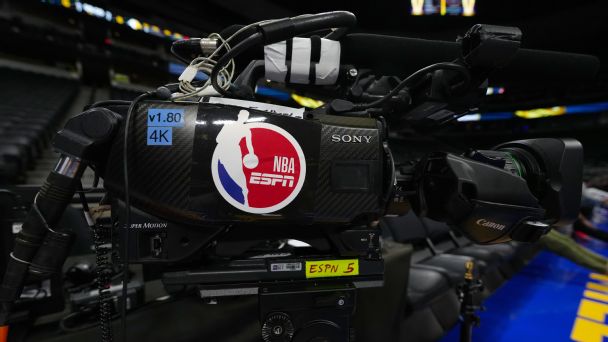
Wednesday, Nov. 26
Pistons at Celtics, 5 p.m.
Timberwolves at Thunder, 7:30 p.m.
Rockets at Warriors, 10 p.m.
All times Eastern
Butler is a believer that winning cures all. So he’s been on Kuminga about improving winning habits — defend with constant effort, rebound with force, limit turnovers, creatively get to the line, space properly and take a back seat when necessary.
But he has also voiced a belief in strategic tweaks that could make it easier for them to thrive on the court together when Curry is either on the bench or out of the lineup — shifting to a more deliberate, methodical, isolation approach that should be more conducive to Butler’s and Kuminga’s skill sets.
“The second that Steph is in the game is completely different than when Steph is out and I’m in the game,” Butler said. “And if you’re still trying to run the Steph stuff, it’s not going to work. Nobody’s overreacting to anybody. I’m not saying ‘No, we should never do that.’ All I’m saying is Steph is the ultimate cheat code.
“So it is not fair to anybody to say that they can’t play with whatever lineup or whatever lineup. Because if the man is out there, anybody can play with him.”
Kuminga missed the final four games of the road trip with knee tendinitis. There’s a possibility he returns at some point during an upcoming, spaced-out five-game homestand that should include three or four traditional practices. That, Green said, could serve as an ideal time to integrate Kuminga back into the mix in an intentional manner.
“Guess what we can do when he’s coming off the bench?” Green said. “Feature him. That’s what he needs. But it takes some time. There’s been no practice. He’s got his knee. So let’s get healthy and we’ll put this together. It’s a long season. He’s going to help us win a f—ing ton of games.”
Butler is presented with that idea.
“I think with that though, he has to understand it doesn’t mean just score,” Butler said. “Because I don’t mind taking the back seat to him and letting him do his thing. And I’m down there in the dunker spot, I’m setting screens. I don’t mind. But you know what we better do?”
Limit turnovers?
“No,” Butler said. “We better f—ing win. That’s it. Whatever we want to do, I’m fine with it. It better be towards winning. Cause that’s all that I care about. I don’t care about nothing else.”
To win at the highest level in a competitive conference, Butler and Green believe they need an impactful version of Kuminga at crucial times. That’s a common organizational thought. But it’s increasingly falling on Butler to be the voice that guides it along.
“Well, it’s because he’s heard the same voices for what? Years,” Butler said.
He reaches back to his past again.
“Can you just imagine being in a place where — like, I get it — are you wanted here or not?” Butler said. “That’s the worst feeling, man. Can you imagine it? I had to deal with it at the later part [of my tenure] in Miami. It’s like, damn, I’ve been here. What are we talking about? It’s a s—ty place to be in. And no matter what you do, you don’t feel like you’re doing right.
“So he’s got a lot of feelings, which is OK,” Butler continued. “I think I just got to stay on him, though. Let him know that I am in your corner. We all are in your corner. Just breathe. Breathe. We’re not out to get you. I don’t think anybody’s out to get you. Fans or media, maybe. But the people in it, we are not out to get you, bro. I promise you. I promise.”
A high-court claim that had pitted the leading sports agent Jonathan Barnett against his former business partners, Olympic medallists John Regis and Jennifer Stoute, was withdrawn following an extraordinary three-year legal battle.
A partnership of which Barnett was a member, the sports agency Stellar Athletics LLP, pursued a claim against Regis and Stoute for £1.2m after they left the partnership in 2021. It was settled by the parent company, CAA Stellar, in April 2024, shortly after Barnett himself resigned from the company.
Speaking about the matter for the first time, Stoute described the case as “three years of tortureâ€.
Stellar Athletics LLP, in court documents signed by Barnett, claimed it was owed £952,000 by Regis and Stoute for money they were alleged to have taken in excess of their profit share to cover costs incurred while working for the company for 20 years, plus around £300,000 in damages after the pair left and set up a rival agency, Astra Partners.
The Guardian can reveal the settlement was reached after Regis and Stoute found dozens of racist, sexist and homophobic text messages allegedly sent by other figures in sport to a phone number registered to Barnett. There is no suggestion Barnett sent or supported such messages himself.
The messages included dozens of offensive messages apparently sent to Barnett featuring supposed jokes about Africans, Muslims, Mexicans, Chinese and gay people, as well as one about wife beating.
Contacted by the Guardian, neither Barnett nor CAA Stellar commented on any aspect of the case or the reasons for the settlement.
Partners
Barnett founded the Stellar Group sports agency with David Manesseh in the 1990s. It grew into one of the biggest agencies in the world, primarily in football. Barnett personally negotiated Gareth Baleâ€s then-world-record £85m transfer from Tottenham to Real Madrid in 2013, and represented a host of other footballers including Ashley Cole, Ledley King and more recently Jack Grealish and Ivan Toney.
Jonathan Barnett in 2014. Stellar Athletics claimed it was owed £952,000 by John Regis and Jennifer Stoute after they left the partnership. Photograph: Peter Luckhurst/Shutterstock
Regis, one of Britainâ€s most well-known sprinters, won a silver medal in the 4x100m relay at the 1988 Seoul Olympics and was awarded the MBE in 1994. Stoute won a bronze medal in the 4x400m relay at the 1992 Barcelona Olympics and later became widely known as Rebel in the ITV show Gladiators. Regis and Stoute have two children together but are no longer a couple.
Regis and Stoute went into business with Barnett following their retirement from athletics. Stellar Athletics Limited was formed in 2001, but initially operated without contracts or formal written agreements between the parties. The agency represented many of the biggest names in British track and field, including Dwain Chambers, Phillips Idowu, Eilish McColgan and Laura Muir.
In their defence statement Regis and Stoute said there was “an agreement reached in 2000 that on the eventual sale of the larger Stellar business, both Mr Regis and Ms Stoute would receive a proportion of the proceeds of such a sale, albeit that no proportion was expressly agreed.â€
In 2011 a limited liability partnership was incorporated, Stellar Athletics LLP, with Regis and Stoute retaining their 30% and 20% stakes from the previous company respectively.
Stellar contended that this cemented the agreement that Regis and Stoute were entitled to future profits from Stellar Athletics. Regis and Stoute say they were entitled to proceeds from an eventual sale of the larger Stellar business.
Sale and split
In 2020 Barnettâ€s Stellar Group was sold to American entertainment agency International Creative Management (ICM) for $100m (£76.5m). ICM is a Los Angeles-based film and entertainment agency who at the time represented A-listers including Samuel L Jackson, Jerry Seinfeld and Ellen DeGeneres, and NFL and NBA stars. Barnett stayed on after the sale as executive chairman of a new company, ICM Stellar Sports.
Regis and Stoute resigned from Stellar Athletics in June 2021 and took all the companyâ€s 90 athletes to their new company, Astra Partners.
In September 2021 ICM Stellar Sports announced a merger with another Hollywood talent group, Creative Artists Agency (CAA). A deal worth a reported $750m (£573m) was finalised in 2022, to create a new company, CAA Stellar. Barnett was appointed executive chairman of CAA Stellar.
In October 2021 Regis and Stoute were sued by Stellar Athletics who accused them of conspiring to take the LLPâ€s business.
Jonathan Barnett, John Regis and Jennifer Stoute were partners in a business that attracted 90 athletes. Photograph: Ian Walton/Getty Images
According to court documents, Regis and Stoute were accused of “taking all of the employees, consultants, clients and other assets of the LLP [Stellar Athletics] to a new vehicle†and “coordinating and carefully planning their resignations and the taking of the LLPâ€s business.â€
They were also accused of “breach of contract, breach of the obligations, breach of fiduciary duty, breach of confidence and conspiracyâ€.
In addition, Stellar Athletics claimed they were owed £952,000 for money taken from Stellar Group during the previous 10 years over and above the agreed profit share. Stellar Athletics said that amounted to £247,000 by Regis and £705,000 by Stoute.
Stellar accepted that the terms of the LLP (limited liability partnership) permitted Regis and Stoute to overdraw beyond their combined 50% profit share, including money for their childrenâ€s school fees, but claimed such sums were repayable.
Regis and Stoute insist they were entitled to draw funds as salary, and to cover operating expenses. Their initial earnings when the business was set up were around £1,000 per month each, but increased over time, according to court documents.
Regis and Stouteâ€s defence refers to previous occasions when Stellarâ€s in-house accountant Peter Lazard “would irregularly mention to Mr Regis and Ms Stoute that they owed money to the company, including towards 2010 that they owed £900,000 or thereaboutsâ€. Despite these conversations no repayment was made.
“The basis for the alleged debt was unclear to Mr Regis and Ms Stoute, was inconsistent with their conversations with Mr Barnett, and was never explained to them by anyone,†Regis and Stouteâ€s defence stated.
“No demands were made of them and instead they continued to be permitted to take the profits of Stellar Athletics Limited as their income and to pay school fees as previously agreed. In the event, Mr Regis and Ms Stoute understand that the alleged debts were ‘written offâ€, albeit it is disputed that they were actual debts due and owing by Mr Regis and Ms Stoute.
“It was agreed and understood that Mr Regis and Ms Stoute could continue to draw monies from the LLP, as they had done from Stellar Athletics Limited, and that they would have no obligation to repay the same. As such, as with Stellar Athletics Limited, Mr Regis and Ms Stoute were entitled to such drawings which constituted, in effect, guaranteed earnings.â€
Regis and Stouteâ€s defence also claims that after reviewing the sums they were said to owe in Stellarâ€s 2020 accounts, the companyâ€s accountant Melvin Gantz confirmed in writing that the money was not repayable.
Jennifer Stoute played Rebel in ITVâ€s popular show Gladiators. Photograph: ITV/Shutterstock
It was also claimed that Barnett apologised to Stoute for demanding the repayments and his general treatment of the couple in December 2020.
“Knowing that he was in the wrong in terms of how he had treated Mr Regis and Ms Stoute, Mr Barnett apologised,†their statement says. “The defendants will rely, amongst other matters, on a WhatsApp message from Mr Barnett to Ms Stoute of 6 December 2020, in which Mr Barnett said, ‘I apologised. Either he [ie Mr Regis] has to accept my apology and we can get on with everything as before or he can take over stellar share and go on his ownâ€.â€
In reply, Stellar Athletics said Barnett apologised not because he felt he was in the wrong but because he realised that Regis was upset and wanted to move beyond that.
Regis and Stoute claim they entered the partnership with Barnett on the understanding that he was planning to sell the business, and that they would receive a share of the proceeds.
“In 2000 or thereabouts, it was agreed by Mr Barnett that on the eventual sale of the larger Stellar business by Mr Barnett and Mr Manasseh, Mr Regis and Ms Stoute would receive a proportion of the proceeds of such a sale,†their defence said. “It was on this basis that they agreed to work for Mr Barnett.â€
Regis and Stoute claim they and other Stellar staff were not told about the sale to ICM until after it had taken place, and that they were not offered a share of the proceeds, according to court documents.
“Mr Regis and Ms Stoute were eventually told about the sale at a large zoom meeting in October 2020, at which several dozens of participants were present,†their defence states.
“Mr Regis was angry about the breach of trust on the part of the ICM Members in going ahead with the sale behind his and Ms Stouteâ€s back. The events detailed above, including the failure to honour the 2000 agreement by which they were to receive benefits, the secretive manner in which the sale was carried out, and/or the disrespectful manner in which the sale was belatedly announced to Mr Regis and Ms Stoute, caused Mr Regis and Ms Stoute concerns that they were not being treated fairly.
“The ICM Members were aware of Mr Regis and Ms Stouteâ€s concerns. In all the circumstances, the relationship of trust and confidence came to an end in or around November 2020.â€
In response, Stellar Athletics denied that Regis and Stoute were entitled to a proportion of proceeds from the sale. Their reply to Regis and Stouteâ€s defences states: “there was no discussion of the ‘eventual sale†of the ‘larger Stellar business.â€â€
Stellar Athletics also said that Stellar employees were informed about the ICM deal at the first opportunity, as “the sale of shares by Mr Barnett and Mr Manasseh was a commercially sensitive and confidential matterâ€.
Following the announcement of the sale, Regis and Stoute began making plans to leave the company, citing a breach of trust. They resigned to form Astra Partners in 2021 on the eve of the Tokyo Olympics.
Left to right: Derek Redmond, Roger Black, John Regis and Kriss Akabusi of Great Britain after winning world championship 4x400m gold in Tokyo in 1991. Photograph: Gray Mortimore/Getty
Before they resigned Regis and Stoute had been asked to accept a lower percentage of future profits, which was declined, a point accepted by Stellarâ€s legal team in court documents.
“Among other proposals, including a continued 50-50 profit sharing, some of the options which were discussed were on the basis of a 70-30 split,†it states. “It is accepted that no agreement was reached.â€
‘We just wanted it to go awayâ€
Attempts to reach a negotiated settlement failed to result in an agreement. The case appeared to be heading to trial in 2024 until the chance discovery of racist and sexist material on an old phone registered to Barnett, which was in the possession of Stoute.
Barnett appears to have been the recipient of the messages, which were sent by two people, one a well-known sports figure and the other a football scout.
Regis and Stouteâ€s lawyers, Primas Law, wrote to Stellarâ€s legal team about the text messages in January 2024, saying they were considering disclosing them to the court as relevant to the case.
In February 2024 Barnett resigned from his position as executive chairman of CAA Stellar. The case was taken over by Los Angeles-based lawyers engaged by CAA, who in April 2024 agreed to withdraw the claim against Regis and Stoute. Both parties walked away from the case without admitting liability, and bore their own costs.
The agreement did not require either Stoute or Regis to sign a non-disclosure agreement, enabling them to discuss their experience of the case.
“For us it was three years of torture,†Stoute said. “When I first heard about the sale I thought it was amazing. I was happy for Jonathan, and I thought it was going to be amazing. I thought I would get my bus pass!
“But of course, none of that happened. And then all of a sudden, we went from expecting a payout, to allegedly owing this enormous amount of money. Instead of Jonathan giving us any sort of payback for the sale of the company, they made it look like we owed them. They sold the company [Stellar Group] for $100m [to ICM] and didnâ€t give us even give us a tissue. It was zero, not even anything.â€
Regis said: “Most of Stellarâ€s agents werenâ€t interested in athletics, but Jonathan loved the sport, and appreciated its value to the business, particularly in America. The initial hook from Jonathan was that the company was going to be sold at some point, and when it did we would be entitled to profits from the sale, but that didnâ€t happen. And we ended up getting sued by Stellar.
“We entered negotiations with them in the end to see if we could come to some type of settlement, but that didnâ€t appear to be possible. We just wanted it to go away because it was costing us so much money in legal fees, and were relieved when CAA withdrew the claim.â€
The Detroit Red Wings‘ 3-1 win over the New York Rangers on Sunday night produced a viral moment after a late game empty net attempt by Detroit forward Mason Appleton sparked a chaotic scrum at Madison Square Garden.
Appleton, playing in just his 19th game with Detroit since being acquired earlier this season, tried to score into the empty net before time expired but his attempt came a few seconds too late. Rangers goaltender Jonathan Quick did not appreciate the effort and immediately chased after Appleton from the bench. As the final horn sounded, both teams spilled onto the ice and collided in a massive scrum in the Rangers end with every player involved.
Some fans felt Quick overreacted given that only seconds remained and that Appleton was simply trying to finish the game for his team. NHL insider Elliotte Friedman weighed in on the confrontation and said he loved seeing that level of emotion.
Advertisement
Bookmark The Hockey News Detroit Red Wings team site to stay connected to the latest news, game-daycoverage, and player features.
“This isn’t very 21st Century male of me, I think the league misses this stuff, I loved it,” Friedman explained. He also spoke about Quick as a player and person at age 39, saying his longevity comes from more than talent alone. “I think the NHL would be better off if you had more guys like that, I loved it, I loved him charging off the bench like I don’t even care who he plays for, it’s got nothing to do with the teams. It’s all about nope, not doing that, I loved it. Loved it. If every guy cared about their team as much as quick did there, the league would be a better place.”
“Best Overall Team Game”: Todd McLellan Loves What He Saw From Red Wings In 2-1 Win
Advertisement
Beyond the chaos, Detroitearned a hard fought win. Lucas Raymond scored the game winning goal in the third period after Alex DeBrincat opened the scoring earlier. Goaltender Cam Talbot faced only 19 shots and stopped 18 thanks to strong defensive play in front of him. Quick was the busiest player on the ice, making 40 saves on 42 shots in an impressive effort that ultimately was not enough.
The Red Wings now head back to Detroit to get ready for Tuesdayâ€s meeting with the Seattle Kraken.
Never miss a story by adding us to your Google News favorites!
Image
For action-packed issues, access to the entire magazine archive and a free issue, subscribe to The Hockey News at THN.com/free. Get the latest news and trending stories by subscribing to our newsletter here. And share your thoughts by commenting below the article on THN.com or creating your own post in our community forum.