- MJF-Bandido was a template for MJF going forward, the great Mercedes promo most fans didn’t see
- Virat Kohli dethrones Rohit Sharma, becomes No. 1 batter in ODI Rankings for the first time since 2021
- How to watch Chelsea vs Arsenal: Live streams, TV details
- India vs New Zealand 2nd ODI 2025: India announces their Playing 11, as Team New Zealand Wins the Toss and Elects to Bowl First Against India
- A Hollywood ending? Inside the final days of LeBron James in Los Angeles
- Everton: How Kiernan Dewsbury-Hall is thriving after Chelsea exit
- WWE Planning Big Event For Italy In 2026
- Scottish gossip: Doig, Raskin, Gassama, Neilson, Ageu, Glasgow, Jikiemi
Browsing: Hall

Bradford DoolittleNov 21, 2025, 07:00 AM ET
- MLB writer and analyst for ESPN.com
- Former NBA writer and analyst for ESPN.com
- Been with ESPN since 2013
With the release of the 2026 BBWAA Hall of Fame ballot earlier this week, we’ve officially entered Cooperstown deliberation season.
There are now two ballots up for consideration. While the writers’ process tends to soak up most of the attention, the contemporary baseball era committee ballot — announced Nov. 3 — is more urgent and intriguing. The results will be determined by a yet-to-be-named committee just before the upcoming winter meetings in Orlando, Florida, and announced on Dec. 7.
Though the writers have until the end of the year to determine their choices for the primary ballot, the era committee process will be upon us not long after the coming Thanksgiving holiday. Each of the Hall’s era committees meet every three years, and this year, the contemporary era committee is considering player candidates from 1980 on. It’s the stronger ballot; the eight candidates average 74.1 career bWAR, while the 33 candidates on the primary ballot average 41.3. Even if you just take the top eight on the main ballot, that group averages 70.4.
Much of the attention has been focused on two candidates: Don Mattingly and Dale Murphy. Heck, the Murphy constituency has its own web site, which among other things features documentaries narrated by country singer Jason Aldean and sportscaster Ernie Johnson.
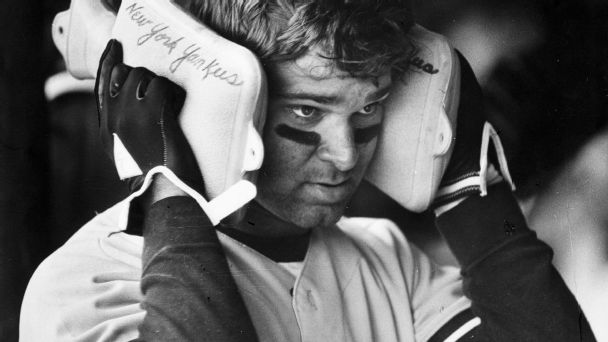
I get it. Mattingly and Murphy were MVPs in the 1980s who attracted legions of fans in their time, many of whom considered one or the other their favorite player. As the captain of the New York Yankees, Mattingly had a huge following, while Murphy’s fan base was national thanks to the Atlanta Braves’ omnipresence on SuperStation WTBS, as it was known then. I have a Murphy model ballglove I got in junior high that I still use all these years later.
Still, the attention sphere around this ballot should be fixed on two other players, who might just be respectively the best hitter and best pitcher who ever played.
Let’s go to the bWAR leaderboard.
2025 ERA COMMITTEE BALLOT
Barry Bonds (162.8 bWAR)
Roger Clemens (139.2)
Gary Sheffield (60.5)
Jeff Kent (55.4)
Dale Murphy (46.5)
Carlos Delgado (44.4)
Don Mattingly (42.4)
Fernando Valenzuela (41.4)
We all know why Bonds and Clemens (and Sheffield) remain Hall candidates rather than Hall members, but that’s all the more reason that we should be on fire, right now, relitigating the issues surrounding their candidacies. It’s as if even those who support the candidacies of Bonds and Clemens in particular have slipped into numb acceptance in a “they should be in, but we all know how it is” sort of way.
The thing about this cycle is that the stakes have changed. Last year, the Hall announced a tweak to their era committee process, something they’ve done many times over the decades. As things stand now, this could be the second-to-last shot for Bonds and Clemens — ever.
The new rule:
“Beginning in 2025, any candidate who appears on a ballot and does not receive votes from at least five of the 16 voters will not be eligible to be placed on the ballot within the Era Committee’s following three-year cycle. Additionally, beginning in 2025, any candidate that does not receive at least five of 16 votes in multiple appearances on Era Committee ballots will not be eligible for future ballot consideration.”
So if Bonds, Clemens or Sheffield fall short of five ballots out of the 16 that will be cast in Orlando, they won’t be eligible the next time their era group comes up in 2028. Then 2031 will be their last chance, if they are nominated.
Editor’s Picks
2 Related
Most fans are firmly entrenched on this issue. To me, the idea that the Hall of Fame would not include baseball’s all-time home run king and one of the top five pitchers ever, when both are eligible and both have official playing records that are intact, means it will forever be less than what it should be. Given the new guidelines, it’s a shadow that would loom over 25 Main Street forever.
At any rate, only 16 people will comprise the committee that will deliberate over the era ballot in Orlando. We don’t yet know who they are — this will be announced in early December — but the makeup of the committee will tell you a lot about how things are likely to go. It always does, which has always been the primary problem with the various incarnations of the veterans and era committees over the years.
To move from committee to Cooperstown, all of the candidates will need to be named on at least 12 of the 16 ballots. But each member is limited to three names. All eight of the players on ballot have their advocates, so even without the looming presence of Bonds and Clemens, it’s a tough road.
There is no one right way to approach this, but over time, I’ve developed a method to working through how to deal with these ballots — whether it’s an era ballot or the writer’s ballot. These are only exercises to inform my writing about the process, as I have never cast a Hall of Fame vote.
I think of the process as a kind of flow chart consisting of three regions, which are: 1. Eligibility; 2. Objective case; 3. Deep dive.
Each region works as a kind of funnel: You filter out some players, others slip through, unless their cases become clear. At each juncture, you’re asking, “Who’s in?” and “Who’s out?” If the player falls in neither category, he slips through the funnel into the next region.
Let’s apply this approach to the current era ballot.
Region 1: Eligibility
For our purposes as voters (let’s all call ourselves that to get into the spirit), this is done for us. We can only vote for those on the ballot. Write-in votes are not permitted.
So why bother to break this out? It’s all about the character clause:
“Voting shall be based upon the player’s record, playing ability, integrity, sportsmanship, character and contributions to the team(s) on which the player played.”
Some of these things are more concrete than others. We don’t have time for a debate on moral philosophy, but for me the key is simply this: Any baseball writer, commentator, reporter, historian, player, manager, executive or anyone else who finds themselves puzzling over a Hall of Fame ballot is qualified to assess baseball. The rest, as former commissioner Faye Vincent once opined, is “hopelessly vague.”
These things can mean different things to different people, but I believe that the time for deciding whether certain transgressions eliminate a candidate from Hall consideration should fall during the pre-ballot process. You don’t want certain people in your Hall of Fame? Then don’t put them on the ballot. Once they land on the ballot, then it’s all about the baseball part of a person’s story.
The Hall does eliminate from consideration anyone on the ineligible list — those banned from the game — so there are acknowledged limitations. But if the player lands on a ballot, then for me the case moves onto the matters related to winning baseball games and accolades, things that are all a matter of the sport’s official record.
As for this era ballot, obviously the eligibility region neither anoints anyone, nor rules out anyone. So all eight move onto the next region.
Region 2: Objective case
Far more has been written about the objective judgment of Hall of Fame candidates than any other consideration. And let’s face it, this is the fun part.
I want to be clear about one thing: WAR should never be the only consideration for Hall membership. Neither should win shares or home runs or hits or win probability added, or pitcher won-loss record or career saves. You must look at a player’s career holistically and in context, using various criteria and then go from there. In fact, the Hall’s guidelines explicitly prohibit the inclusion of anyone based strictly on some predetermined objective standard.
Top 100 MLB players of all time

Who is the greatest baseball player ever? We ranked the 100 best to ever take the diamond.
Top 25 » | 26-50 » | 51-100 » | Snubs »
Who is too high, too low? » | Full list »
The difficult case of Oscar Charleston »
Which current stars are next? (ESPN+) »
What we’re looking for are the outliers, both positive and negative — those who are no-brainers to get in, and those whose cases aren’t strong enough to move them into our third region. There won’t be any eliminations in this section today, but this step would help us sort out the primary ballot.
As for no-brainers, you can guess where this is headed.
Bonds: He ranks fourth all-time in bWAR (162.8), first in home runs (762), fifth in OPS (1.051), first in walks (2,558), first in runs created (2,892) … and so on. Recognition in one’s own time is a crucial indicator when looking at an era candidate, and of course Bonds has that too. His seven MVP awards are three more than anyone else and he ranks first in award shares for MVP voting.
Clemens: He ranks eighth in bWAR (139.2) and third in pitching bWAR (138.7), won 354 games, ranks third on the strikeout list (4,672) and ranks first in award shares for Cy Young voting.
Yeah, they’re in. These are the performance records of no-doubt Hall of Famers who should not be on this ballot in the first place. Either they should have been in long ago, or they should have been deemed ineligible. But here they are, and their cases remain as clear-cut as ever.
Everyone else moves onto the final region.
Region 3: Deep Dive (aka The Keltner List)
Now we’re into the gray area — candidates who might be Hall worthy or might not. Because of the presence of two no-brainers on the ballot, and the limitation of only being allowed to list three candidates, we’re down to one precious slot.
The Keltner List is a series of questions developed by Bill James in his seminal book on the Hall of Fame, “The Politics of Glory.” The questions are all closed-ended, so for each we land on yes or no. We’ll run through the questions and list the “yes” players for each one. Then we’ll tally it up and see where we land.
1. Was he ever regarded as the best player in baseball?
Remember, we’ve already anointed Bonds and Clemens above, so they are not subject to any of these questions. As for the rest, I give credit for this one to Mattingly and Murphy.
It’s not clear-cut, but Murphy won back-to-back MVPs and would clearly have been in any “best player” conversation during that time (1982 and 1983) and perhaps beyond. Mattingly was AL MVP in 1985, and from 1984 to 1986 he created 20 more runs than any other player in baseball and won two Glove Gloves. Many would have argued he was baseball’s best player at that time.
Yes: Mattingly, Murphy
2. Was he the best player on his team?
This is a yes for everyone except Kent, whose best seasons came as Bonds’ teammate. Kent did win NL MVP in 2000, but hitting behind Bonds (49 homers, .440 OBP) was a boost to his stat line and Bonds had a higher bWAR even in that season.
Perhaps worth mentioning is Valenzuela, who can at least stake claim to this category for his rookie season (1981) when he won the NL Cy Young Award and led the champion Los Angeles Dodgers in bWAR.
Yes: Sheffield, Murphy, Delgado, Mattingly, Valenzuela
3. Was he the best player in baseball (or in the league) at his position?
Everyone gets a yes here. Kent, Murphy and Mattingly won MVP awards. Valenzuela won a Cy Young. These are strong indicators. Sheffield was baseball’s best right fielder in 2003, at the very least. He was probably the top third baseman in 1992. Delgado was the top AL first baseman once or twice. Frankly, for a ballot like this one, this criteria is a fairly low bar.
Yes: Sheffield, Kent, Murphy, Delgado, Mattingly, Valenzuela
4. Did he have an impact on a number of pennant races?
Increasingly, because of the larger playoff formats of the recent era, I’d fold playoff appearances and performance into this question. The murky part is the “a number of” component. Murphy played on a lot of lousy teams and got into only one playoff series. Same for Mattingly, though he raked when he got there. Delgado had a huge 2006 postseason for the New York Mets but that was his only playoff appearance.
I’m giving a yes here to Valenzuela and Sheffield for coming up big for championship teams. Kent didn’t get a ring but hit well over 49 postseason games.
Yes: Valenzuela, Sheffield, Kent
5. Was he a good enough player that he could continue to play regularly after passing his prime?
This is a yes for all of them, as all played regular roles well into their 30s. Mattingly’s career was truncated because of his ongoing back trouble, but that shortened his peak more than anything. He still played until he was 34 and was the Yankees’ regular first baseman the entire time.
Yes: Sheffield, Kent, Murphy, Delgado, Mattingly, Valenzuela
6. Is he the very best player in baseball history who is not in the Hall of Fame?
As long as Bonds and Clemens are on the outside, this question probably will remain a no for everyone who becomes subject to this inquiry.
Yes: None
7. Are most players who have comparable career statistics in the Hall of Fame?
This is where we turn to Jay Jaffe’s JAWS data as it exists at baseball-reference.com. The answer for all is: No. None of our remaining six really come all that close to the average standards of existing Hall of Famers at their positions. There are some comparable Hall of Famers, but not most. This is not surprising, as an era ballot is by definition a second-chance process.
Yes: None
8. Do the players’ numbers meet Hall of Fame standards?
James’ systematized this question in an ingenious way, and we’ll lean on his standard of a score of 50 for our six hopefuls. We’re left with two players who clear that bar.
Yes: Sheffield, Kent
9. Is there evidence to suggest that the player was significantly better or worse than is suggested by his statistics?
I’m going to focus on peak value, which I’ve always weighed close to equal with career value, though with a higher bar. (Think: Sandy Koufax and his ilk of short-career greats.)
The ‘What If?’ Hall of Fame
How a simple twist of fate might have sent these five players to Cooperstown. Bradford Doolittle »
This helps Mattingly. His peak bWAR (35.7) is still below the Hall average at first base, but it’s better than David Ortiz and Orlando Cepeda, and virtually even with Tony Perez, Fred McGriff and Frank Chance. These are all Hall of Famers. Delgado (34.5 peak bWAR) isn’t far back, so it’s really about where you want to draw the lines.
Meanwhile, Sheffield had a higher peak bWAR (38.0) than Hall of Famers Dave Winfield, Dave Parker, Enos Slaughter, Willie Keeler and Kike Cuyler, plus some other 19th century types further down the list. When you consider that Sheffield topped 500 homers (509) and has a career bWAR (60.5) that is borderline, his case is building.
Finally, Murphy gets a similar bump. His peak bWAR (41.2) ranks 18th among center fielders. He’s above quite a few Hall of Famers.
Yes: Sheffield, Mattingly, Murphy
10. Is he the best player at his position who is eligible for the Hall of Fame but not in?
No one can claim to be the best hitter or pitcher not in. Zeroing in on specific positions, using JAWS, you can’t quite get there for any of the six. Even if you discount active players and PED-associated candidates at first base, Mattingly and Delgado still have to deal with the specter of Keith Hernandez, John Olerud, Will Clark and others who, at the very least, are hard to separate. Kent is blocked in this area by Lou Whitaker and Bobby Grich, to start. None of the six clear this bar.
Yes: None
11. How many MVP-type seasons did he have? Did he ever win an MVP Award? If not, how many times was he close?
We’ll fold in Cy Young voting for Valenzuela and defer to the awards-share figures. We have award winners — Valenzuela, Mattingly, Murphy and Kent — and those are enough for a yes. Sheffield had three top-three MVP finishes and had more MVP shares than any of the three who won the award. Delgado just missed winning the AL MVP Award in 2003.
Yes: Sheffield, Kent, Murphy, Delgado, Mattingly, Valenzuela
12. How many All-Star-type seasons did he have? How many All-Star Games did he play in? Did most of the other players who played in this many go into the Hall of Fame?
Delgado played in only two All-Star Games and there aren’t many Hall of Famers with only two ASG appearances. Everyone else played in many All-Star Games and land in peer groups comprising quite a few Hall of Famers.
Yes: Sheffield, Kent, Murphy, Mattingly, Valenzuela
13. If this man were the best player on his team, would it be likely that the team could win the pennant?
Yes: Sheffield, Kent, Murphy, Delgado, Mattingly, Valenzuela
14. What impact did the player have on baseball history? Was he responsible for any rule changes? Did he introduce any new equipment? Did he change the game in any way?
All of these players were historic in different ways, not all of them good. But I’m going to stay positive here and award one yes in a category that I view as extra credit. That goes to Valenzuela, whose impact in Latin America in general and Mexico in particular was immense, and it was pretty significant in Southern California as well.
Yes: Valenzuela
15. Did the player uphold the standards of sportsmanship and character that the Hall of Fame, in its written guidelines, instructs us to consider?
And so we come back, at the end, where many want to begin the discussion. And here, I’m OK with getting into traits such as clubhouse leadership and things like the Roberto Clemente Award and other areas of community impact. When you are comparing similar candidates, those are separating qualities and, I would argue, are germane to the primary task of baseball careers: winning games, pennants, and championships, but also establishing an identity in conjunction with the teams on which you play.
Even so, I’m loath to judge these players in these areas for the most part, so I will seek hard evidence. There, we find that Mattingly was a Yankees team captain. Murphy and Delgado were Clemente Award recipients.
Yes: Mattingly, Murphy, Delgado
So who gets the nod?
Dale Murphy’s Cooperstown case is solid. Will he get the nod this year? Owen C. Shaw/Getty Images
The Keltner List is meant to help you arrive at a thumbs-up or thumbs-down for each candidate put through that ringer. But here I’m taking a different approach. We’ve got three spots. Two of those were claimed early on by Bonds and Clemens, leaving me with one slot.
Well, the Keltner List left three players that landed nine yes votes among the 15 questions: Sheffield, Murphy and Mattingly. All of them are worthy Hall of Famers. But we have to whittle it down, so it comes down to picking one.
My pick: Murphy
Murphy had the highest peak value of the trio and had a stint in the conversation as the best player in the sport. He was an all-around player, as his five Gold Gloves will attest. His reputation in the sport, while not the top-line consideration for me, is something I very much honor.
I wish it didn’t have to be only three and I will always believe that all Hall votes shouldn’t be space-limited by rule. Either someone is a Hall of Famer, or they aren’t. But for now, we have only so many lines to fill in and I’d fill mine with Barry Bonds, Roger Clemens and Dale Murphy.
Whether you agree with this approach probably comes down to your stance on the character clause. For me, this is the simple, direct way to approach the murkiest and most glorious of all baseball debates — whether a player’s career merits Hall of Fame induction.
WWE Hall of Famer Brie Bella says she has one last run left in her.
In 2025, Nikki Bella returned to Monday Night RAW to mince words and lock horns with the best in the women’s division in WWE. After her storyline with Becky Lynch culminated at Clash in Paris in a failed attempt at winning the Women’s Intercontinental Championship, Bella has now moved on to a bigger storyline with Stephanie Vaquer.
This past Monday, she put an exclamation point on her resurgence, cutting a promo over a fallen Vaquer that she had no intention of playing second fiddle, and that the time has come for her to take over the top spot. A match between Bella and Vaquer for the Women’s World Championship has been announced for WWE Survivor Series: WarGames on November 29.
Meanwhile, Brie Bella has been kept updated with what is going on with Nikki Bella on Monday Night RAW. The two have discussed the ongoing shenanigans on their podcast, with the latest episode giving away a matter of revelation.
Brie Bella Says “For Sure” As One Last WWE Run Seems Plausible In 2025
Brie Bella retired from in-ring competition in 2019, noting that she wanted to step away from the squared circle to focus on her family. However, she did make a one-off appearance at the 2022 Royal Rumble, one year after the twins got inducted into the WWE Hall of Fame.
On The Nikki & Brie Show, Brie Bella assured that there was at least one last run in her as she has been taking care of her body, and it was the right time for a comeback to the squared circle. Brie also noted that she does not really mind if it is for one night only or for the whole year. The important thing is that she is ready for it.
I think there is definitely a last run in me,” Brie Bella said. “I’m at the age and I’m strong, and I think it’s because I’m working out so hard and I’m feeling good. But I’m like–there’s for sure a last run in me–wherever it may take me, wherever it may be, I hope it’s with you, wherever that is at, who knows? Whether it is for one night or 200 nights, we’ll see.”
The Bella Twins have been a part of some noteworthy storylines in WWE’s women’s division. Most notably in 2014, when Brie Bella wrestled Stephanie McMahon in a match that ultimately segued into a sibling rivalry, before the two reunited, as Brie helped Nikki win the Divas Championship from AJ Lee before the year ended.
Dave Kotinsky/Getty Images
Despite being a WWE Hall of Famer known for one of the greatest matches in WrestleMania history against “Macho Man” Randy Savage, Ricky “The Dragon” Steamboat has become more associated with AEW over the past few years. Steamboat has been seen at events like AEW Revolution in 2024, where he was involved in Sting’s retirement match, and has made other appearances as well, including feuding with former AEW star Ricky Starks in 2023, and appearing on “AEW Dynamite: Blood & Guts” just last week.
During an appearance on Bill Apter’s “1WrestlingVideo” shortly after, Steamboat was complimentary of AEW, calling it a “first class operation,” while singing the praises of AEW owner Tony Khan’s treatment towards the wrestlers. However, just because Steamboat is fond of AEW doesn’t mean he doesn’t have some critiques, including one about the women’s Blood & Guts match.
“I just question some of the storylines that they like to, you know, bring forward…God bless those girls that was in that [Blood & Guts] match, but I didn’t care for it,” Steamboat said. “I don’t know if it was just too much. I thought, personally, I thought…I don’t know, they had 16 girls in there or something like that. There was just too much going on. Over in this one corner, two girls were doing something, two or three girls were doing something in the other ring, then you go to the other ring, and two or three girls are doing something. You just couldn’t focus on anything, because there was just so much going on. And for me, it’s hard to react.”
If you use any of the quotes in this article, please credit “1WrestlingVideo” and provide a h/t to Wrestling Inc. for the transcription
Roger Federer will become the first member of the ‘Big Three’ of tennis to be inducted into the International Tennis Hall of Fame.
Federer, 44, retired in 2022 having won 103 ATP-level titles, second only to Jimmy Connors (109) during the Open era.
The Swiss great was the first man to win 20 Grand Slam singles titles – a total since surpassed by ‘Big Three’ rivals Novak Djokovic (24) and Rafael Nadal (22).
Federer, one of only eight men to achieve a career Grand Slam, received the news at Swiss Tennis, where he played in his youth, as he was welcomed by some of the current 270 Hall of Fame members in a video call.
“It’s a tremendous honour to be inducted into the International Tennis Hall of Fame and to stand alongside so many of the game’s great champions,” Federer said.
“Throughout my career, I’ve always valued the history of tennis and the example set by those who came before me.
“To be recognised in this way by the sport and by my peers is deeply humbling. I look forward to visiting Newport next August to celebrate this special moment with the tennis community.”
Federer will be inducted over the weekend of 27-29 August next year, when ceremonies will take place in Newport, Rhode Island, in the United States.
Among his 20 major triumphs, Federer won a record eight men’s singles titles at Wimbledon.
He held the world number one ranking for a total of 310 weeks – including a record 237 consecutive weeks.
Broadcaster and journalist Mary Carillo has also been elected in the Contributor Category.
Fred Perry and Virginia Wade are among the famous British names already in the Hall of Fame.
Randy Jones, San Diego Padres Hall of Famer and 1976 NL Cy Young Award winner, has died at the of 75, the team announced on Wednesday.
“With deep sorrow and heavy hearts, the Padres mourn the passing of our beloved left-hander, Randy Jones,” the statement read. “Randy was a cornerstone of our franchise for over five decades, highlighted by becoming the first Padres pitcher to win the Cy Young Award. Inducted into the Padres Hall of Fame in 1999, his impact and popularity only grew in his post-playing career, becoming a tremendous ambassador for the team and a true fan favorite. Crossing paths with RJ and talking baseball or life was a joy for everyone fortunate enough to spend time with him. Randy was committed to San Diego, the Padres, and his family. He was a giant in our lives and our franchise history.
“We extend our heartfelt sympathy to his wife Marie and the entire Jones family during this difficult time. RJ will be greatly missed.â€
A fifth-round pick in the 1972 MLB draft, Jones joined the Padres a year later, making 19 starts during his rookie season. During his time in San Diego from 1973-1980, he would win 92 games and make two All-Star Game appearances.
Advertisement
In 1975, Jones posted the first of two 20-win seasons and finished runner-up for the Cy Young behind New York Mets ace Tom Seaver. A year later, the award would be his after a season where he went 22-14 with 25 complete games, 315.1 innings pitched, a 2.74 ERA, and a 1.027 WHIP. The lefty’s sinker was so effective, he recorded only 93 strikeouts that season and opponents’ batting average with balls in play was .238, according to FanGraphs, third-lowest in MLB.
Jones even earned the cover of “Sports Illustrated” that summer.
When Jones took the mound, Padres fans came out as shown by the nearly 12,000-person increase in attendance during his 21 home starts in 1976.
“It was a magical relationship that we had when I was pitching, the way the fans supported me in â€75 and â€76, and even after that,†Jones told MLB.com’s AJ Cassavell in 2018. “I enjoy them. I still look forward to seeing a lot of those folks.â€
During his final start in 1976, Jones suffered a torn nerve in his left biceps tendon and needed surgery that offseason. He would pitch only 147.1 innings the following year and was dealt to the Mets ahead of the 1981 season. He would play two seasons in New York before being released. He tried one last go with the Pittsburgh Pirates, but was cut before the start of the 1983 season.
Advertisement
During his retirement, Jones became a mentor for pitcher Barry Zito with the longtime Oakland A’s and San Francisco Giants lefty going to Jones’ home for lessons for three years. Zito would go on to win 165 games, make three All-Star games, and win the 2002 AL Cy Young Award and the 2012 World Series.
The Padres retired Jones’ No. 35 in 1997 and he was later a part of the franchise’s inaugural Hall of Fame class in 1999.
Nov 19, 2025, 05:56 AM ET
Well, this will come as no surprise to anyone who’s paid any attention over the past quarter-century: Roger Federer was elected to the International Tennis Hall of Fame in his first year of eligibility, the Rhode Island-based Hall announced Wednesday.
The first man to win 20 Grand Slam singles titles, and part of an era of unprecedented greatness with rivals Rafael Nadal and Novak Djokovic — during what Federer termed “a golden time for tennis” — he was the only candidate to receive enough support in the player category for the Hall’s class of 2026. The Hall does not reveal voting results.
TV announcer and journalist Mary Carillo, who also was a player, was elected in the contributor category. The induction ceremony is in August.
Roger Federer was the first man to win 20 Grand Slam singles titles, a total later surpassed by his rivals Rafael Nadal and Novak Djokovic. His last match came at Wimbledon in 2021. Photo by TPN/Getty Images
“I’ve always valued the history of tennis and the example set by those who came before me,” Federer said. “To be recognized in this way by the sport and by my peers is deeply humbling.”
He is one of eight men with a career Grand Slam, collecting eight championships at Wimbledon, six at the Australian Open, five at the US Open and one at the French Open.
“I didn’t predict I was going to have this many majors,” Federer once said in an interview with The Associated Press. “I was hoping to maybe have one, to be quite honest, at the very beginning of my career.”
Federer’s first Slam title came at the All England Club in 2003, and he broke Pete Sampras’ then-record for a male of 14 major titles by winning Wimbledon in 2009, defeating Andy Roddick 16-14 in the fifth set of the final. Federer claimed his 20th at the 2018 Australian Open.
“I don’t really feel like I’m playing for the records,” Federer once told the AP. “I play this game because I love it.”
His Grand Slam count eventually was surpassed by Nadal, who got to 22 before retiring last year at age 38, and Djokovic, who has 24 and is still active at 38.
With a terrific forehand and serve, an attacking, all-court style and footwork that made everything seem so effortless, Federer won 103 tournaments and 1,251 matches in singles, totals eclipsed in the men’s game only by Jimmy Connors in the Open era, which began in 1968.
Federer finished five years at No. 1 in the ATP rankings, spent a record 237 consecutive weeks and a total of 310 in the top spot, led Switzerland to the 2014 Davis Cup title and teamed with Stan Wawrinka for a doubles gold medal at the 2008 Olympics.
An ambassador for the game who often answered questions in English, French and Swiss German at news conferences, Federer played his last match at Wimbledon in 2021. He was a month shy of 40 at the time.
His retirement announcement came the following year; he bid farewell by playing doubles alongside Nadal at the Laver Cup, an event Federer’s management company founded.
Along the way, Federer established himself as a model for younger athletes such as Carlos Alcaraz, 22, the current No. 1 who owns six Slam trophies.
“The elegance he has shown on court, off the court — how he treated people, everyone; a really humble guy — everything he does, he does with elegance,” Alcaraz said. “I appreciate that. He took the game to another level … that’s what I admire the most.”
At the height of his powers, Federer reached a record 10 consecutive Grand Slam finals from 2005-07, winning eight. That dominance extended to appearing in 18 of 19 Slam finals; he also put together streaks of 23 semifinals and 36 quarterfinals at majors.
Djokovic has called those “results that didn’t seem human.”
According to the Hall, Carillo was the first woman to regularly commentate on tennis broadcasts and was a correspondent for HBO’s “Real Sports.” She won six Emmy Awards and three Peabody Awards and was inducted into the Sports Broadcasting Hall of Fame in 2018.
“I’ve been privileged to spend my career sharing the stories of this magnificent game,” Carillo said, “and if I’ve opened any doors along the way, it will make this day in August even more meaningful.”
Next year’s ballot will include holdovers Juan Martin del Potro and Svetlana Kuznetsova in the player category, while Serena Williams and Ashleigh Barty, who both played their last matches in 2022, will be eligible for the Hall for the first time.
Nov 17, 2025, 12:33 PM ET
COOPERSTOWN, N.Y. — Cole Hamels, Ryan Braun and Matt Kemp are among 12 newcomers on the Baseball Hall of Fame ballot released Monday, and Carlos Beltrán heads 15 holdovers after falling 19 votes shy in 2025 balloting.
Howie Kendrick, Daniel Murphy and Rick Porcello also are among the first-time eligibles, joined by Shin-Soo Choo, Edwin Encarnación, Gio González, Alex Gordon, Nick Markakis and Hunter Pence.
Cole Hamels — who threw a no-hitter in 2015 against the Cubs — along with Ryan Braun and Matt Kemp are among 12 newcomers on the Baseball Hall of Fame ballot. Carlos Beltrán heads 15 holdovers after falling 19 votes shy in 2025 balloting. Jeff Chiu/AP
Beltrán received 277 of 394 votes for 70.3% in the 2025 balloting, when Ichiro Suzuki, CC Sabathia and Billy Wagner were elected.
A nine-time All-Star, Beltrán hit .279 with 435 homers and 1,587 RBIs over 20 seasons with Kansas City (1999-2004), Houston (2004, 2017), the New York Mets (2005-11), San Francisco (2011), St. Louis (2012-13), the New York Yankees (2014-16) and Texas (2016).
He received 46.5% support in his first ballot appearance in 2023, then rose to 57.1% in his second.
Beltrán was the only player cited by name in baseball commissioner Rob Manfred’s 2020 report concluding the Astros used electronics in violation of rules to steal signs during Houston’s run to the 2017 World Series title and again in the 2018 season. Three days after the report was issued, the Mets said Beltrán was out as their manager, just 2½ months after he was hired.
Other holdovers include steroids-tainted stars Alex Rodriguez (146 votes, 37.1%) and Manny Ramirez (135, 34.3%), along with Andruw Jones (261, 66.2%), Chase Utley (157, 39.8%), Andy Pettitte (110, 27.9%), Félix Hernández (81, 20.6%), Bobby Abreu (77, 19.5%), Jimmy Rollins (71, 18%), Omar Vizquel (70, 17.8%), Dustin Pedroia (47, 11.9%), Mark Buehrle (45, 11.4%), Francisco RodrÃguez (40, 10.2%), David Wright (32, 8.1%) and Torii Hunter (20, 5.1%).
Pettitte is on the ballot for the eighth time after doubling support from 13.5% in 2024. A player can appear on the ballot up to 10 times.
Editor’s Picks
BBWAA members with 10 or more consecutive years of membership are eligible to vote. Ballots must be postmarked by Dec. 31, and results will be announced Jan. 20. Anyone elected will be inducted July 26 along with anyone chosen Dec. 7 by the hall’s contemporary baseball era committee ballot considering eight players whose greatest contributions to the sport were from 1980 on.
Hamels, a four-time All-Star, was 163-122 with a 3.43 ERA for Philadelphia (2006-15), Texas (2015-18), the Chicago Cubs (2018-19) and Atlanta (2020), pitching a no-hitter for the Phillies against the Cubs on July 25, 2015. He was MVP of the 2008 NL Championship Series and World Series as Philadelphia won its second title, its first since 1980.
Braun, the 2011 MVP and a six-time All-Star, hit .296 with 352 homers and 1,154 RBIs for Milwaukee from 2007 to 2020. He was suspended for the final 65 games of the 2013 season for violations of baseball’s drug program and labor contract. A 50-game suspension for an alleged positive test in 2011 was overturned after Braun challenged the chain of custody of the urine sample.
Kemp, a three-time All-Star, batted .284 with 287 homers and 1,031 RBIs for the Los Angeles Dodgers (2006-14, 2018), San Diego (2015-16), Atlanta (2016-17), Cincinnati (2019) and Colorado (2020).
Barry Bonds, Roger Clemens, Don Mattingly and Dale Murphy are being considered by the contemporary era committee, along with Carlos Delgado, Jeff Kent, Gary Sheffield and Fernando Valenzuela.
SPOTLIGHTED PODCAST ALERT (YOUR ARTICLE BEGINS A FEW INCHES DOWN)…
SHOW SUMMARY:ÂToday we jump back five years to an episode of The Deep Dive with Rich Fann from Nov. 14, 2020. Chris Maitland returned to talk with Rich about the Wrestling Observer Hall of Fame inductions of Jun Akiyama and Kenny Omega – particularly against the field of other Japanese candidates, his issues with the process, and how transparency could help some of the questions listed.
Additionally, the pair have a chat about the recent AEW Brandi Rhodes promo, which leads to a run-in from Melissa, and her thoughts on two black women code switching on television, the Kenny Omega Jordan tribute and Melissaâ€s feelings as a Duke alum and former cheerleader, and Melissaâ€s view on how the book “The Namesake†could tie into professional wrestling, particularly with the realm of language brokering as a tool of linguistics.
Rich returns and Chris finishes talking about wrestlers that he feels should have a higher profile, including Ted Turner, Don Owen, Caristico, Junkyard Dog, and Kerry Von Erich, and finish with newer inductees in 2021 that bear watching.
FREE VERSION:AUDIO LINK
AD-FREE VIP VERSION:ÂVIP AUDIO LINK
NOT VIP? NO PROBLEM… CLICK HERE FOR VIP SIGN UP INFO
OTHER LINKS…
Or support us on Patreon…
Subscribe to our YouTube Channel…
Emails…
wadekellerpodcast@gmail.com
kellerwade@gmail.com
pwtorch@gmail.com
WWE
Trish Stratus has always been seen as one of the standout stars of her generation, and because of the strides she made for women in pro wrestling, many of the women in the industry today have cited her as one of their inspirations, making her return in 2025 a major deal. Recently, Stratus sat down for an interview with “Pod Meets World,” where she looked back at how she originally got her break in pro wrestling.
Stratus noted that back in the day in Canada, you had to make noise on the independent scene to get noticed, but her entry into wrestling was different. “I was on a television show with one of my magazine covers to promote it,” she recalled. She then noted that Michael Hays had filmed an episode of “Slam Jams” where he advertised a WWE show coming to Canada, and since the people she worked with knew she loved wrestling, they introduced Hays to her. “And he says, ‘Why don’t you send your stuff to us?’ And I was like, there was no, you know, this was 1999, there’s not a flourishing women’s anything except for the women who walk the men to the ring,” Stratus recalled.
Trish Stratus claims she went the extra mile to get WWE’s attention
WWE
Despite where she would end up someday in the pro wrestling industry, Trish Stratus never thought that she could someday end up wrestling or finding her place in the industry, and because of this, was taken aback by Michael Hayes’ interest in her. “So I just thought ‘Okay, yeah, I’ll do that.’ So, I prepared a press kit, I sent it to them, and I hear back initially,” she added. This didn’t deter her, however, as she packed her bags and found out where Adam “Edge” Copeland trained before joining WWE, and trained with the men.Â
“I said ‘No-no…I want to be treated like the boys!’ So, I went into this wrestling gym, basically, with all boys and I wanted to be treated like the boys, and I learnt to wrestle!” she claimed, and added that within two weeks, WWE got back to her and offered her a contract.
Stratus then admitted that winning over the audience wasn’t easy, but she eventually did it. “They saw me try and…I said to myself, each week I go out, I just have to, like, improve; I have to do better than I did last week,” she explained. “And they saw me do really crappy matches and pretty awful moves at times, but they stood with me and they saw the improvement and they watched me; it was like a true underdog story!”
If you use any quotes from this article, please credit “Pod Meets World” and provide a h/t to Wrestling Inc. for the transcription.
The National Baseball Hall of Fame in Cooperstown, N.Y., is where the sport’s legends live forever.
But how do those legends make it to Cooperstown in the first place? There are two ways:
Players can be elected to the Hall of Fame via the Baseball Writers’ Association of America ballot or via an Era Committee ballot.
With the 2026 BBWAA Hall of Fame ballot set to be released Monday, here is everything you need to know about Hall of Fame voting.
Who is eligible to cast a BBWAA ballot?
Only active and honorary members of the Baseball Writers†Association of America who have been active baseball writers for at least 10 years are eligible to vote. They must have been active as baseball writers and members of the BBWAA for at least 10 years before the date of the election in which they are voting.
In 2024, 394 BBWAA members cast a Hall of Fame ballot.
How often does the BBWAA vote on Hall of Fame candidates?
The BBWAA, which has been electing players to the Hall of Fame since 1936, has been voting on each new class of candidates annually since 1966.
Which players are eligible for the BBWAA ballot?
Any player who played in at least 10 Major League seasons and ended their MLB playing career at least five calendar years before the next election is eligible to be placed on that year’s ballot.
For example, pitcher Cole Hamels made his big league debut in 2006 and participated in 15 seasons, last playing in 2020. Thus, he is an eligible first-year candidate for the 2026 BBWAA ballot.
Who decides which players make the final ballot?
The most recent BBWAA ballots have included 25-30 players, so not every player who had a 10-plus-year career and has been retired for at least five years can be put on the ballot. The final say lies with a BBWAA-appointed screening committee consisting of baseball writers. It’s a six-member committee, and an eligible first-time candidate makes it on the ballot if they are nominated by any two of the six members.
Those ballot newcomers are joined by any player who received a vote on at least 5% of ballots cast in the previous election.
What are the voting procedures?
Ballots are mailed to each BBWAA elector during the latter half of November. An elector can vote for as few as zero and as many as 10 players on their ballot. Each elector must then sign their ballot and return it by Dec. 31 for it to be counted. The voting results of the BBWAA ballot for the Class of 2026 will be announced Jan. 20 on MLB Network.
How many votes are required for a player to be elected to the Hall of Fame or remain on the ballot?
Players who didn’t receive the amount of votes necessary for election must receive at least 5% of the vote in order to remain on the ballot. Any player who receives a vote on fewer than 5% ballots cast will no longer be considered by the BBWAA for the Hall of Fame.
How long can players remain on the BBWAA ballot?
Players can remain on the ballot for 10 years, assuming they receive at least 5% of the vote each year. If a player isn’t elected after 10 years on the ballot, they will no longer be considered by the BBWAA for the Hall of Fame.
How many players have been elected to the Hall of Fame via the BBWAA ballot?
The BBWAA has elected 137 players to the Hall, as of 2025.
Which player received the highest percentage of votes on the BBWAA ballot?
ERA COMMITTEE BALLOT VOTING
What are the Era Committees?
Formerly known as the Veterans Committee, the Era Committees consider retired Major League players who are no longer eligible for Hall of Fame election by the BBWAA, along with managers, umpires and executives.
There are three Era Committee ballots:
There are 16 members on each committee, consisting of Hall of Famers, current and former MLB executives, media members and historians. The committee members change each year.
How often does an Era Committee vote on Hall of Fame Candidates?
The Era Committees rotate on a three-year cycle, with one ballot being considered each year.
Who decides which players make the final ballot?
The Historical Overview Committee, which is appointed by the BBWAA, serves as the screening committee, consisting of 10-12 representatives. It identifies eight candidates for each year’s Era Committee ballot.
Who is on this year’s Era Committee Ballot?
The Contemporary Baseball Era Committee player ballot is up for consideration this year. The eight Hall candidates on the ballot are Barry Bonds, Roger Clemens, Carlos Delgado, Jeff Kent, Don Mattingly, Dale Murphy, Gary Sheffield and Fernando Valenzuela.
What are the voting procedures?
For 2025, the Contemporary Era Committee will meet on Dec. 7 at baseballâ€s Winter Meetings in Orlando to consider this year’s eight candidates. Each committee member may vote for as few as zero and as many as three of the eight candidates on the ballot. The voting results will be announced live that night on MLB Network at 7:30 ET.
How many votes are required for a player to be elected to the Hall of Fame or remain on the ballot?
Candidates who receive a vote on 12 of the 16 ballots cast (75%) are elected to the Hall of Fame and are included in the following year’s induction ceremony in Cooperstown. Per a 2025 rule change, any candidate on an Era Committee ballot who does not receive at least five votes from the 16-member committee will not be eligible to be placed back on that ballot in its next three-year cycle. But a candidate can return to an Era Committee ballot after skipping one cycle.
For example, if one of the candidates on the 2025 Contemporary Baseball Era Committee player ballot receives fewer than 5 votes, they wouldn’t be eligible for the next such ballot in 2028. However, they would be eligible to be placed back on that ballot in 2031.
Any candidate who receives fewer than five votes on multiple Era Committee ballots will no longer be eligible for future consideration.